Museum of Contemporary Circumpolar Art (MCCA)
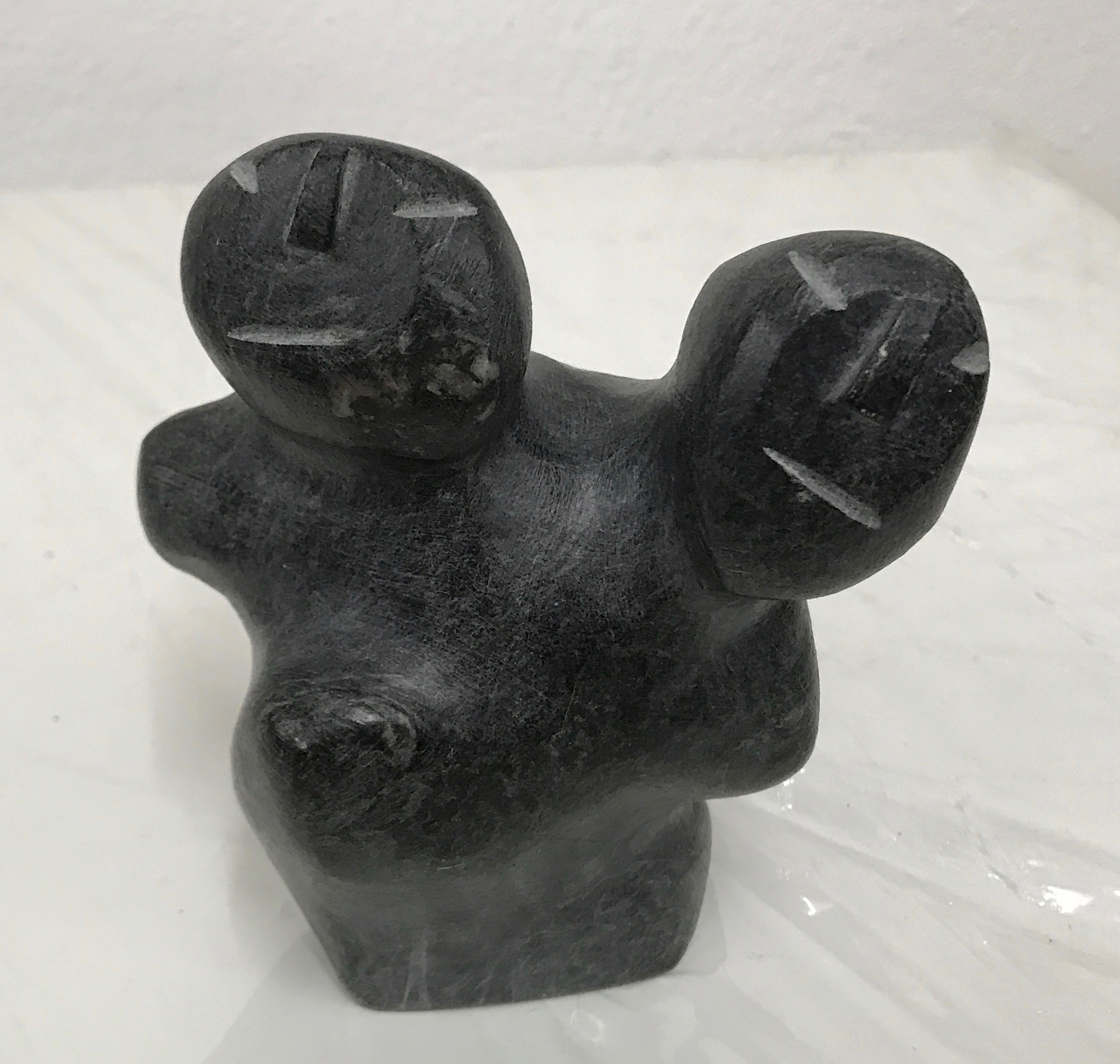
ObjectFaces (Sculpture)
George Arluk, ᐊᓗ
Settlement: Eskimo Point / Arviat
(1949-2023) — E3-1049
Alternative Names: Arluk Arluk, George Arluk, Aiyarani Arluk, Arloo Arluk, Arlook Arluk, Arlu Arluk, Arlooq Arluk
George Arluk was born in Winnipeg, Manitoba on May 5, 1949. The fourth child of a family of seven he was the only one of his siblings to become full-time artist. His brother, Charlie Panigoniak, would also carve but would choose music as his artistic expression.
Arluk taught himself to carve at age nine. His early works are influenced by the abstract style of Tiktak, Kavik and John Pangnark who encountered while he lived in Rankin Inlet from 1956 to 1975.
By the mid-1970s Arluk's had developed a distinct style; his abstract sculptures varying greatly from the typically realistic representations of Inuit life. His subjects sometimes include spirits and arctic animals, but his main theme is the human figure, depicting single figures such as hunters and mothers with babies in their amautiks. He sometimes groups figures together to form abstracted compositions of gently curving forms, drawing comparison to the sculpture of Henry Moore.
Arluk is considered to be one of the most prominent artists of the Keewatin region.
Accession
2007.85
Object Type
Sculpture
Description
Faces
Production Year
ca. 2000
Production Location
ᖃᒪᓂᑦᑐᐊᖅ,
Materials
Basalt
Dimensions
H15.2 x W12.7 x L7.6 cm
Provenance
Waddington's
Photograph